Table of Contents
Missing one tooth or several teeth can affect more than your smile. It can make eating, speaking, and even daily comfort more difficult. Modern dentistry offers different implant options to replace missing teeth and help restore normal function. Understanding the types of dental implants available can help you make an informed decision before starting treatment.
Every patient has different dental needs. The right implant depends on your oral health, jawbone condition, the number of missing teeth, and your treatment goals. Learning about the types of dental implants can help you ask the right questions during your consultation and understand what each option offers.
At Oval Clinic Dental in Business Bay, every treatment begins with a detailed examination to determine which implant solution best matches your condition. This guide explains the most common choices in simple terms.
Why Dental Implants Are a Popular Choice
Implants are designed to replace missing tooth roots. A titanium post is placed into the jawbone, where it gradually bonds with the bone. After healing, a custom-made crown, bridge, or denture is attached to the implant.
Many people choose implants because they:
- Help maintain jawbone health
- Feel stable while eating and speaking
- Look similar to natural teeth
- Could last for many years with the right care
- Do not rely on neighbouring teeth for support
Learning about the different types of dental implants helps patients understand which treatment may suit their needs.
Main Types of Dental Implants
There are several types of dental implants, and each serves a different purpose depending on the patient’s oral condition.
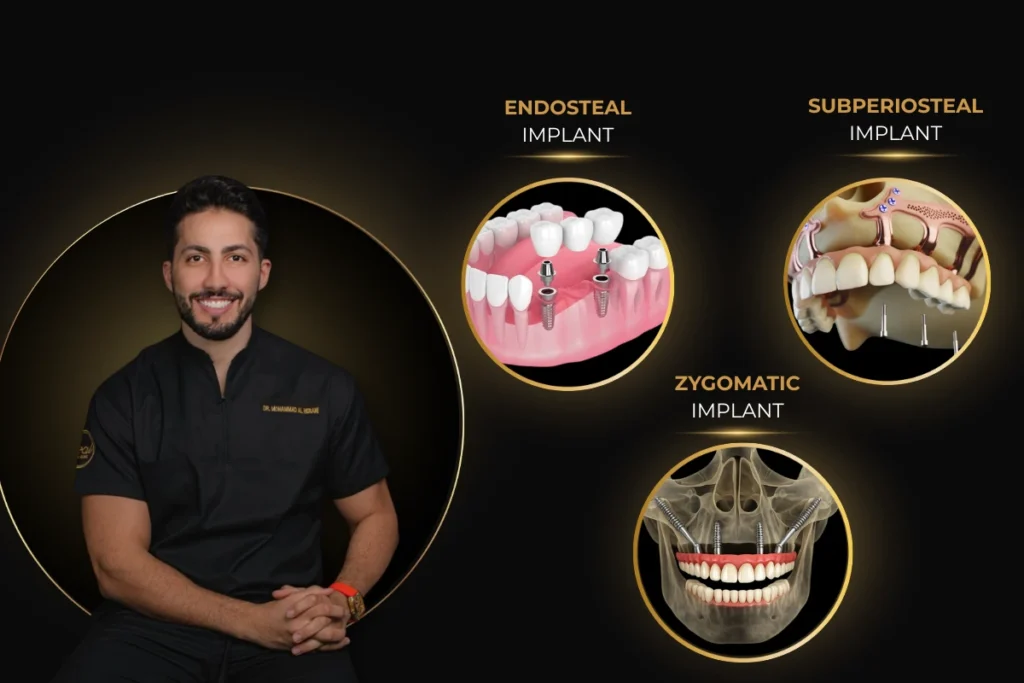
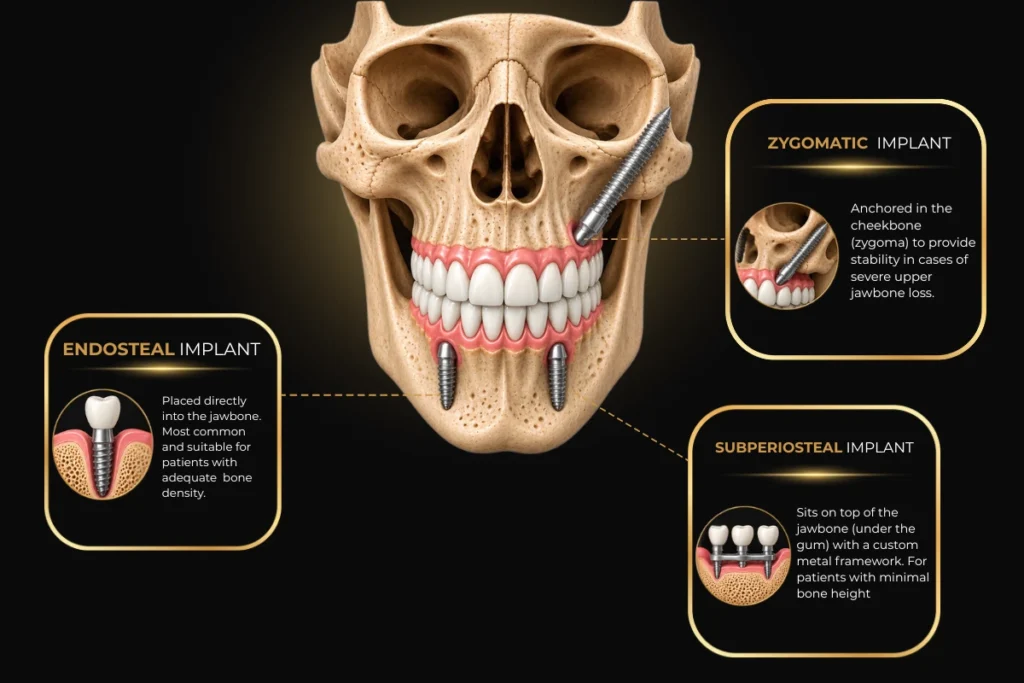
1. Endosteal Dental Implants
Endosteal implants are the most common option. They are placed directly into the jawbone and are usually made of titanium.
These implants are recommended for patients with:
- Healthy jawbone density
- One or more missing teeth
- Good overall oral health
When an implant heals, a crown or bridge is attached. Because of their stability and long-term success, endosteal implants remain one of the most widely used types of dental implants.
2. Subperiosteal Dental Implants
Subperiosteal implants sit on top of the jawbone but underneath the gum tissue. They may be considered for patients who do not have enough healthy bone and are not suitable candidates for bone grafting.
Although they are used less often today, they can still provide a practical solution for selected cases. Among the available types of dental implants, this option may be suitable when traditional placement is not possible.
3. Zygomatic Dental Implants
Among all types of dental implants, this is the longest because it is attached directly to the cheekbones of the zygoma, not just in the jaw. This type is usually done for patients having severe loss of jaw bone.
Visit our page tol earn more about types of dental implants.
Dental Implants Based on Tooth Replacement
Dental implants can also be grouped by the number of teeth being replaced.
Single Tooth Implant
A single implant replaces one missing tooth without affecting the neighbouring healthy teeth. It includes one implant, one abutment, and one dental crown.
This option is commonly recommended when only one tooth is missing.
Implant-Supported Bridge
If several teeth are missing next to each other, an implant-supported bridge may be used instead of placing an implant for every missing tooth.
It provides good stability while reducing the number of implants needed.
Full-Arch Dental Implants
Patients who have lost most or all of their teeth may benefit from full-arch implant treatment. Several implants are placed in the jaw to support a complete set of replacement teeth.
These solutions provide improved comfort compared to removable dentures and are among the advanced types of dental implants available today.
Factors That Help Choose the Right Implant
Selecting the best option depends on several important factors.
Jawbone Health
Healthy bone is necessary for successful implant placement. If bone loss has occurred, procedures such as bone grafting may be recommended before treatment.
Number of Missing Teeth
Replacing one tooth requires a different treatment approach than replacing an entire arch. The number of missing teeth plays a major role when choosing between the various types of dental implants.
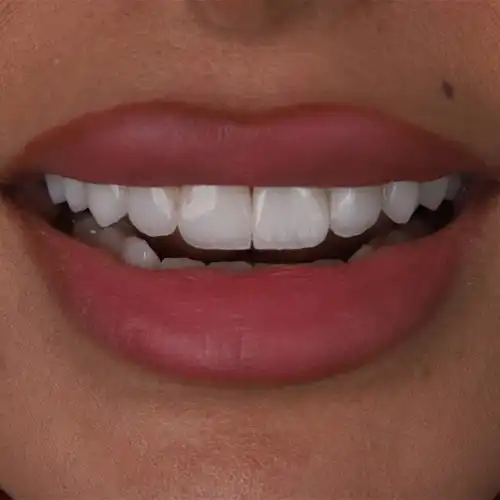
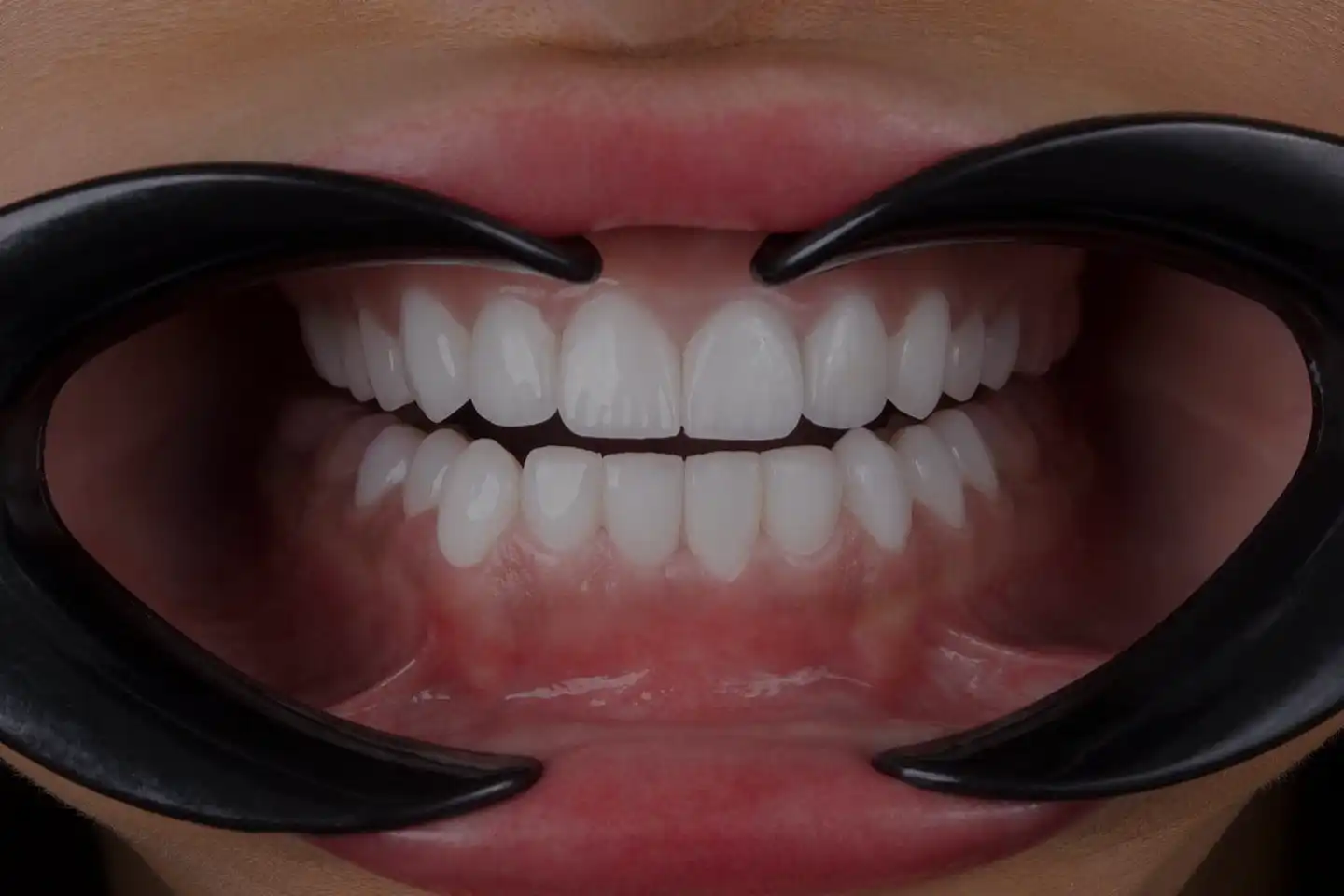
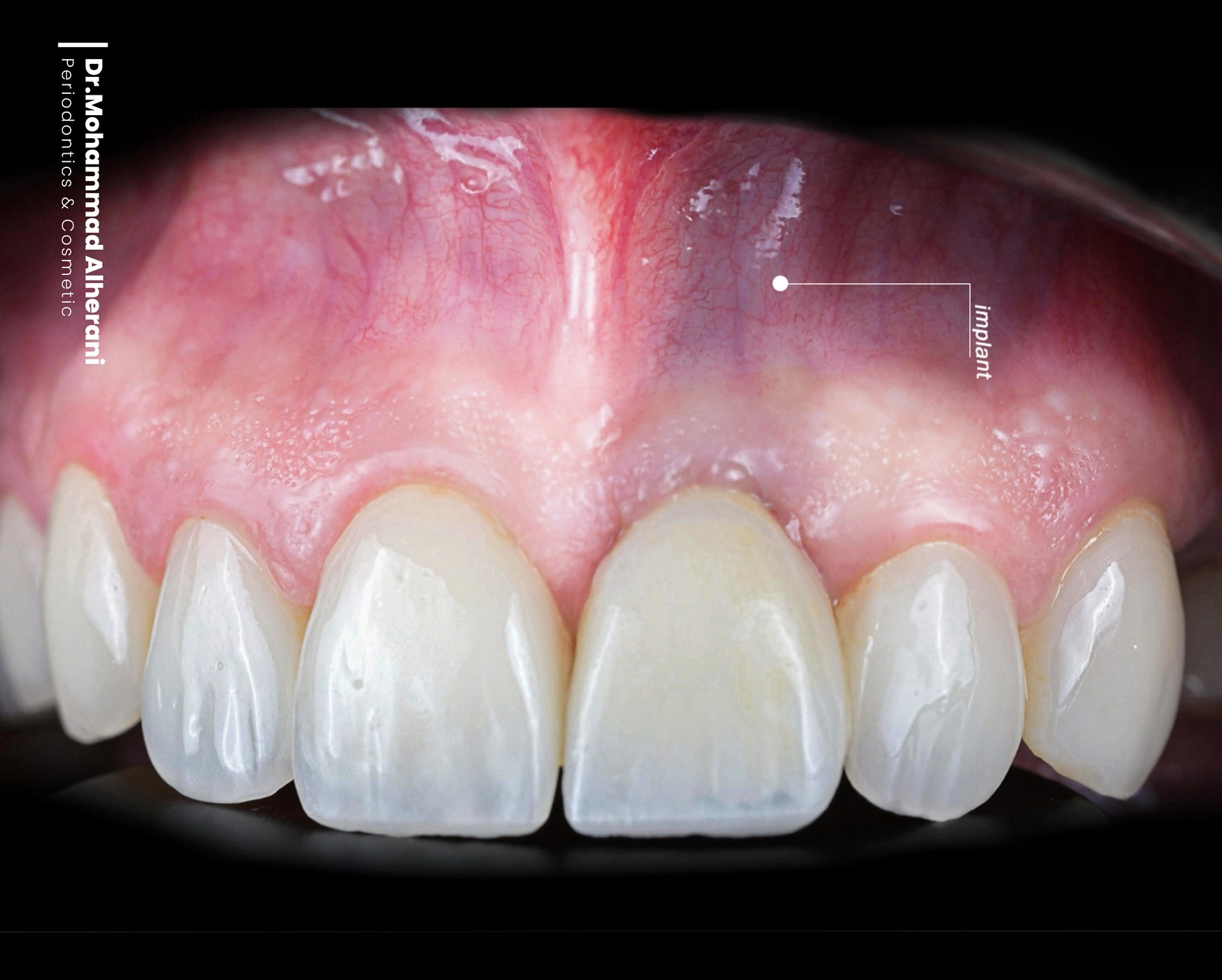
Modern crowns look very natural in colour and shape.
Overall Oral Health
Healthy gums and good oral hygiene improve the success of implant treatment. Existing dental problems should be treated before implant placement whenever possible.
Medical History
Certain medical conditions or medications may affect healing. Your dentist will review your medical history before recommending treatment.
What Happens During the Dental Implant Process?
Understanding the treatment process helps reduce uncertainty.
Initial Consultation
The dentist performs an examination, takes digital scans or X-rays, and discusses suitable types of dental implants based on your needs.
Implant Placement
The titanium implant is placed into the jawbone during a minor surgical procedure.
Healing Period
The implant bonds with the jawbone over several months. This process creates a stable foundation for the replacement tooth.
Final Restoration
Once healing is complete, the permanent crown, bridge, or denture is attached to complete your smile.
Benefits of Choosing Dental Implants
Many patients choose implants because they provide long-term function and appearance.
Some key advantages include:
- Natural-looking results
- Improved chewing ability
- Better speech
- Support for jawbone health
- Long-lasting replacement option
- Comfortable fit
- Stable solution for missing teeth
Knowing the available types of dental implants allows patients to compare these benefits with their own treatment goals.
Caring for Dental Implants
Proper care helps implants remain healthy for many years.
Good habits include:
- Brush twice daily
- Floss around implants every day
- Visit your dentist for regular check-ups
- Avoid smoking when possible
- Wear a night guard if you grind your teeth
Even though implants cannot develop cavities, healthy gums remain essential for long-term success.
Why Professional Assessment Matters?
Every smile is different. While online information can explain the basic types of dental implants, only a dental examination can determine the most suitable treatment for your situation.
Modern diagnostic tools allow dentists to evaluate bone quality, gum health, and bite alignment before recommending a treatment plan. A personalised approach helps improve both function and appearance while supporting long-term oral health.
At Oval Dental Clinic in Business Bay, patients receive careful assessments and clear explanations so they can understand their treatment options and make informed decisions about replacing missing teeth.
Conclusion
There are several types of dental implants, and each is designed to meet different dental needs. Whether you need to replace one missing tooth or restore an entire smile, understanding your options is the first step toward making the right choice.
A professional consultation helps determine which implant solution best suits your oral health, bone condition, and personal goals. With proper planning and regular dental care, dental implants can provide a stable, comfortable, and natural-looking replacement for missing teeth for many years.
Looking for a trusted dental clinic in Business Bay? Visit Dr. Mohammad AlHerani at Oval Dental Clinic for an in-depth consultation and 3D digital scan.
Frequently Asked Questions
1. What are the main types of dental implants?
There are three main types of dental implants: the primary is endosteal implants, which are placed inside the jawbone, and subperiosteal implants, which rest on top of the jawbone beneath the gums. Learn more about the rest of the types of dental implants here.
2. Which dental implant is best for one missing tooth?
A single dental implant is usually the preferred option because it replaces the missing tooth without affecting the neighbouring healthy teeth.
3. Can I get dental implants if I have bone loss?
Yes. Depending on the amount of bone available, your dentist may recommend bone grafting or another suitable implant solution.
4. How long do dental implants last?
With good oral hygiene and regular dental check-ups, dental implants can last for many years and, in many cases, decades.
5. How do I know which type of dental implant is right for me?
A dental examination, digital imaging, and evaluation of your oral health will help your dentist recommend the most suitable implant option for your individual needs.

Medically reviewed by:
Dr Mohammad AlHerani
DHA Licensed Specialist Periodontist at Oval Dental Clinic
- Master of Dental Surgery (MDS) in Periodontics
- Specialist in Implantology
- Doctor of Dental Surgery (DDS)
Education:
- Doctor of Dental Surgery (DDS) - Near East University, Northern Cyprus
- British Healthcare Management Diploma (BHMD)
Advanced Clinical Training:
- Periodontics
- Implantology
- Digital & Aesthetic Dentistry